Think about your last bite of something delicious, like a ripe mango, a spicy curry, or a square of dark chocolate. Your tongue reacted in a split second, long before you had time to think about it. That quick reaction comes from tiny sensory structures called taste buds.
In this guide, we’ll cover how many taste buds are on the human tongue, what they do, the different types, the five basic tastes, and what to do when your taste buds swell and hurt.
How Many Taste Buds Are on the Human Tongue?
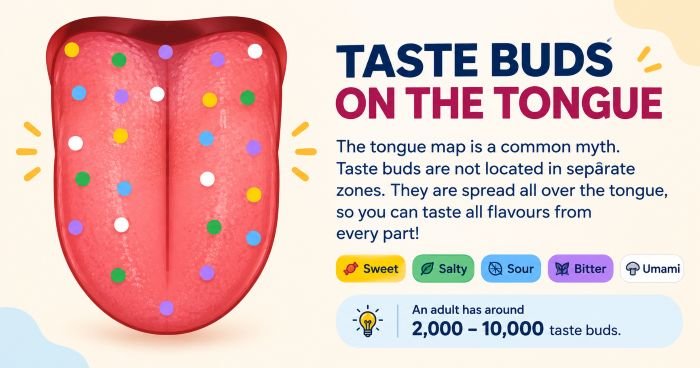
The most common answer is that the average adult has around 10,000 taste buds. The real number varies a lot from person to person. Most estimates fall between 2,000 and 10,000, and some people have far more than others.
Each taste bud holds roughly 50 to 100 taste receptor cells. These cells detect chemicals in your food and send signals to your brain. Your taste buds also aren’t only on your tongue. Some sit on the roof of your mouth, inside your cheeks, and in your throat.
The number also changes over time. Taste buds renew themselves every 10 to 14 days, but as we age, the replacement rate slows down. That’s one reason children often seem pickier about bitter vegetables, and why older adults sometimes feel food tastes bland.
What Do Taste Buds Do?
A taste bud is a sensory organ that helps you make sense of what you eat. Here is what they do:
- Detect flavor chemicals. When food dissolves in saliva, the chemicals touch receptor cells in the taste buds.
- Send signals to the brain. The receptor cells pass messages along nerves to the brain, which identifies the taste.
- Protect you. Bitter and sour tastes can warn you about spoiled or toxic food.
- Guide your nutrition. Sweet and savory tastes tend to point toward energy and protein.
Taste is only part of what you experience as flavor. Smell, texture, temperature, and even the sound of a crunch all blend with taste. That’s why food seems dull when you have a blocked nose.
Types of Taste Buds on the Tongue
Taste buds sit inside small bumps called papillae. You can see them if you look at your tongue in the mirror. When people talk about the types of taste buds on the tongue, they usually mean the types of papillae that hold them:
- Fungiform papillae. These are mushroom-shaped and found mostly on the tip and sides of the tongue. They look like tiny red dots and hold many taste buds.
- Circumvallate papillae. These are the largest, arranged in a V shape at the back of the tongue. There are usually only 8 to 12 of them, but each contains hundreds of taste buds.
- Foliate papillae. These look like small folds or ridges along the back sides of the tongue. They also hold taste buds, though their number drops as you age.
- Filiform papillae. These are the most numerous and give your tongue its rough texture. They don’t contain taste buds. They help you grip food and sense texture.
So the tongue really has four kinds of papillae, and only three of them carry taste buds.
The Five Basic Tastes
You’ve probably seen the old “tongue map” diagram in a school textbook, showing sweet at the tip and bitter at the back. It’s a myth. Every taste can be detected in every area of the tongue that has taste buds, though some spots may be a little more sensitive to certain tastes.
Scientists recognize five basic tastes:
- Sweet. Signals sugars and energy-rich foods like fruit and honey.
- Salty. Helps regulate the sodium your body needs for nerves and muscles.
- Sour. Found in citrus, yogurt, and fermented foods. It can also warn of unripe or spoiled food.
- Bitter. Found in coffee, dark greens, and some medicines. It’s often a warning sign for toxins, which is why many people dislike it at first.
- Umami. A savory, mouth-filling taste found in mushrooms, tomatoes, aged cheese, soy sauce, and broth. It’s linked to protein-rich foods.
Researchers are also studying whether fat may be a sixth taste, but the five above remain the accepted basics.
What Causes Swelling of Taste Buds on the Tongue?
Have you ever noticed a sore, puffy bump on your tongue? Swollen taste buds are common, and they’re usually harmless. Some frequent causes include:
- Irritation or injury. Burning your tongue on hot tea, biting it, or scraping it on sharp foods can inflame the papillae.
- Spicy or acidic foods. Chili, citrus, and sour sweets can irritate the tongue’s surface.
- Transient lingual papillitis. Often called “lie bumps,” these are small, painful bumps that come and go within a few days.
- Oral infections. Oral thrush (a yeast infection) or viral infections can cause swelling and a white coating.
- Acid reflux. Stomach acid reaching the mouth can irritate the tongue.
- Allergies. A food or product allergy can trigger swelling in the mouth.
- Smoking and alcohol. Both can inflame the tongue and dry out the mouth.
- Nutritional deficiencies. Low levels of iron, folate, or vitamin B12 can affect the tongue’s appearance and sensitivity.
- Poor oral hygiene. Bacteria and food debris can build up and cause irritation.
How to Soothe Swollen Taste Buds
Most cases clear up on their own within a few days. In the meantime, you can:
- Rinse with warm salt water a few times a day
- Drink cool water and avoid very hot, spicy, or acidic foods
- Brush your teeth and gently clean your tongue
- Try ice chips or a cold treat to numb the discomfort
- Skip tobacco and alcohol until you’ve healed
When to See a Doctor
Book an appointment if swelling lasts longer than two weeks, keeps coming back, or comes with fever, trouble swallowing, or difficulty breathing. Get emergency help right away if your tongue or throat swells quickly, since that may be a severe allergic reaction. A bright red, bumpy “strawberry” tongue together with a sore throat and fever should also be checked by a doctor.
Simple Ways to Keep Your Taste Buds Healthy
- Brush your teeth and tongue twice a day
- Stay hydrated so saliva can carry flavors to your taste buds
- Eat a varied diet rich in zinc, iron, and B vitamins
- Avoid smoking, which dulls taste over time
- Let very hot food cool before you eat it
Final Thoughts
Your taste buds are small but hardworking. With around 10,000 of them helping you detect sweet, salty, sour, bitter, and umami flavors, they make every meal more enjoyable and help keep you safe. Treat them well, and they’ll keep renewing themselves every couple of weeks.
FAQS
How many taste buds are on the human tongue?
About 10,000 on average, with a range of roughly 2,000 to 10,000.
Do all taste buds taste the same thing?
No. Each bud holds cells for different tastes, and all five basic tastes can be sensed across the tongue.
How long do swollen taste buds last?
Usually a few days. If it lasts more than two weeks, see a doctor.