There is a moment, early on Diwali morning, when the house is quiet, the floor is freshly swept, and you kneel down with a handful of coloured powder. That small ritual of drawing a rangoli at your doorstep is what makes the festival feel like home. It welcomes guests, invites Goddess Lakshmi, and honestly, it just makes your entrance look beautiful.
Diwali 2026 falls on 8 November, so you still have time to plan. Whether you are a first-timer or a seasoned artist, this guide shares the best Diwali rangoli ideas, simple how-to steps, and answers to the questions people ask most.
Why Rangoli Matters on Diwali
Rangoli, also called kolam in South India and alpana in Bengal, is more than decoration. Traditionally, it is believed to bring prosperity and good luck, and to keep negativity away from the home. Rangoli is usually made at the main entrance, because that is where Lakshmi is said to enter.
The good news: you do not need to be a trained artist. A clear idea, a few basic materials, and a little patience are enough.
Which Type of Rangoli Is Best for Diwali?
There is no single “correct” answer, because the best rangoli depends on your space, time, and skill level. Here is how the main types compare:
- Dot (sanskar bharti) rangoli: Built on a grid of dots joined by lines. It is neat, symmetrical, and great for beginners who want a traditional look.
- Free-hand rangoli: Drawn without dots, using flowing patterns like paisleys, lotus petals, and peacocks. Best if you are comfortable drawing.
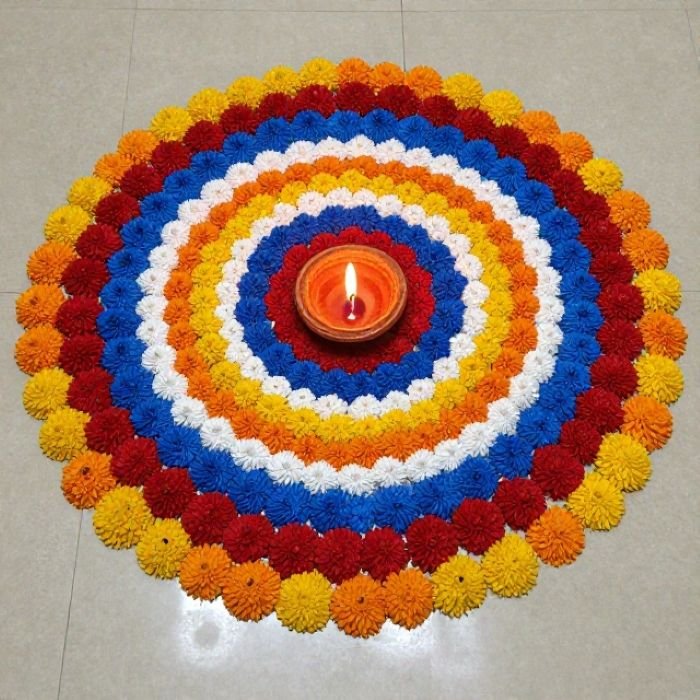
- Flower rangoli: Made with marigold, rose, and jasmine petals. It smells wonderful, looks vibrant, and is eco-friendly.
- Diya rangoli: Designed around or with real diyas, so the lamps become part of the pattern.
- Sticker or stencil rangoli: The fastest option for busy households, and ideal for glossy floors where powder slips.
Our pick: If you want one traditional choice, go for a lotus rangoli. The lotus is Lakshmi’s seat, so it is considered especially auspicious for Diwali. If you are short on time, a flower rangoli with a centre diya is the easiest crowd-pleaser.
15 Diwali Rangoli Ideas You Can Try This Year
Easy Rangoli Designs for Beginners
- Simple lotus rangoli: Draw a circle, add eight to twelve petals, and fill with pink and white.
- Diya border rangoli: A row of small diyas drawn along the doorway edge, in orange and yellow.
- Dot rangoli (5×5 grid): A classic star or flower pattern that anyone can complete in twenty minutes.
- Swastik rangoli: A simple, auspicious symbol surrounded by dots and petals.
- Corner rangoli: A quarter-circle design placed in a corner of the entrance. Small space, big impact.
Creative and Modern Rangoli Ideas
- Peacock rangoli: Teal, blue, and green feathers fanned out. A true showstopper.
- Floating flower rangoli: Petals arranged in a shallow brass urli filled with water.
- Rangoli with fairy lights: Weave a string of warm LED lights around the outline for an evening glow.
- Mandala rangoli: Concentric circles and repeating patterns. Calming to make, striking to look at.
- Ganesh or Lakshmi motif rangoli: A deity face or footprints (Lakshmi charan) pointing into the home.
Eco-Friendly and Unconventional Ideas
- Rice flour and turmeric rangoli: Natural, safe for pets, and traditional.
- Dry fruit and pulse rangoli: Lentils, rice, and spices make rich textured colours.
- Leaf and petal rangoli: Mango leaves, rose petals, and marigold for a fully biodegradable design.
- Coloured sand or salt rangoli: Easy to colour at home, and very budget-friendly.
- Candle and tealight rangoli: Tealights placed to form a shape, such as a heart, star, or the word “Shubh Deepavali”.
How to Make a Diwali Special Rangoli: Step by Step
Wondering how to make a Diwali special rangoli that actually looks polished? Follow this simple process.
- Clean the surface. Sweep and wipe the floor so it is dry and dust-free. Powder sticks far better on a clean surface.
- Sketch the outline. Use chalk or white powder to draw your basic shape. For symmetry, start from the centre and work outward.
- Plan your colours. Pick three or four colours that contrast well. Red, orange, yellow, and green are festive staples.
- Fill from the inside out. Pinch the powder between your thumb and forefinger and let it flow gently. Use a spoon or a small funnel for tight areas.
- Add outlines last. A thin white or black line around each section makes colours pop.
- Finish with diyas and flowers. Place a lit diya in the centre or along the edges, and scatter a few petals for texture.
Pro tips: Keep a cotton bud handy for fixing mistakes. Use a cardboard stencil for perfect repeating shapes. If it is windy, lightly mist the rangoli with water or use petals, which are heavier than powder.
What Is the Best Rangoli Design?
The best rangoli design is the one that suits your entrance and makes you happy to look at it. That said, three designs consistently win:
- Lotus designs for tradition and auspiciousness
- Peacock designs for colour and drama
- Diya-centred mandalas for a modern look that photographs beautifully
Symmetry, bold contrast, and a clear focal point matter more than complexity. A simple, well-finished rangoli beats a complicated, messy one every time.
Creative Diwali Decoration Ideas for 2026
Your rangoli looks best when the rest of the entrance supports it. Here are some creative Diwali decoration ideas for 2026 to pair with it:
- Marigold toran: Hang a fresh flower garland above the door. It frames the rangoli perfectly.
- Warm string lights: Skip harsh white. Warm yellow lights make colours glow.
- Brass and terracotta diyas: Group them in odd numbers (three, five, seven) for a stylish look.
- Sustainable decor: Use natural colours, flowers, and reusable diyas to reduce waste.
- Floating candles and urli bowls: Place near the rangoli for a calm, elegant touch.
- Handmade paper lanterns: A fun family activity, and they add height to your decor.
- Colour themes: Try a coordinated palette, such as royal blue with gold, or classic orange with magenta, so your rangoli, lights, and torans feel cohesive.
Common Rangoli Mistakes to Avoid
- Starting without a plan, which leads to lopsided designs
- Using too many colours that clash
- Making the design too large for the space
- Ignoring safety: keep diyas away from loose powder, dry petals, and curtains
- Skipping the clean-up. Sweep gently once the festival ends, or compost flower rangolis.
Final Thoughts
Rangoli is one of the most joyful parts of Diwali, and it is meant to be enjoyed rather than perfected. Pick a design that suits your time and skill, involve the family, and let the colours do the talking. Whether you choose a classic lotus, a vibrant peacock, or a petal-filled urli, your doorstep will carry the warmth of the festival.
Which of these Diwali rangoli ideas will you try first? and also shape your Diwali business ideas this year, Share your design in the comments, and happy Diwali in advance!
FAQs
Which type of rangoli is best for Diwali?
Lotus and flower rangolis are considered the most auspicious and are widely loved. Dot rangoli is best for beginners.
How to make Diwali special rangoli?
Clean the floor, sketch an outline, fill with colours from the inside out, add outlines, and finish with diyas and petals.
What are some creative Diwali decoration ideas for 2026?
Marigold torans, warm fairy lights, floating flower urlis, eco-friendly decor, and colour-coordinated themes.
What is the best rangoli design?
Lotus, peacock, and diya mandala designs are the top picks for beauty and meaning.