Ever stared at a big business decision and wished you could see the whole picture on one page? That’s what a SWOT analysis does. It’s one of the simplest planning tools around, and it works whether you’re running a startup, managing a team, or deciding whether to change careers.
This guide covers what a SWOT analysis is, how to do one properly, and how to make it useful rather than a box-ticking exercise. You’ll also find a SWOT analysis template and a worked example you can copy.
What Is a SWOT Analysis?
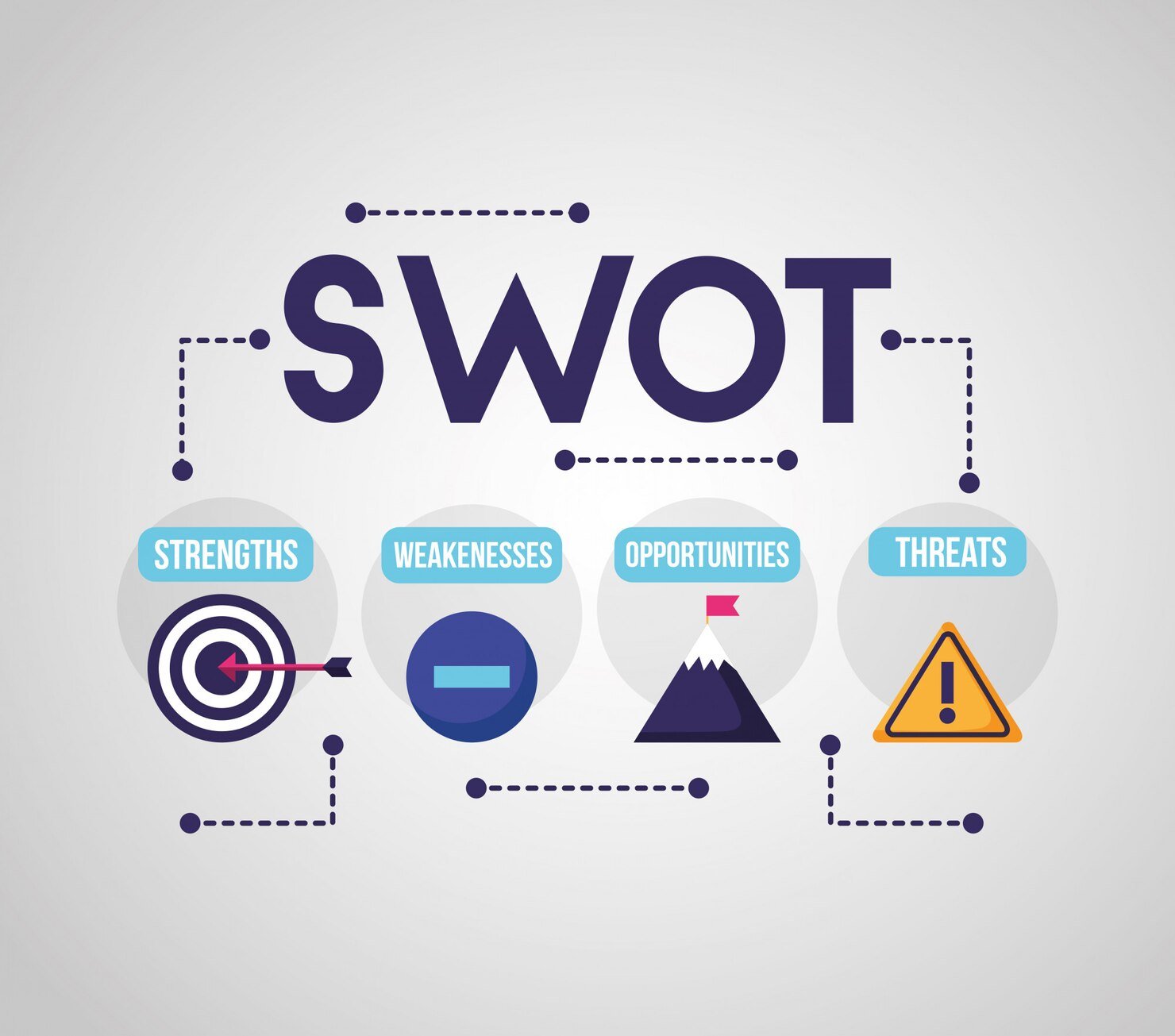
A SWOT analysis is a framework for evaluating a business, project, product, or even yourself. SWOT stands for:
- Strengths: what you do well
- Weaknesses: where you fall short
- Opportunities: external chances you could take advantage of
- Threats: external risks that could hurt you
The first two are internal, meaning you control them. The last two are external, meaning they come from the market, competitors, or the wider world. Keeping that split in mind is the key to doing this well.
If you’ve ever searched “what is a SWOT analysis and how do I locate one?”, the honest answer is that you usually build your own. A generic one downloaded online won’t reflect your situation. You can, however, start from a template (below) and fill it in.
Why SWOT Analysis Still Matters
Plenty of newer frameworks exist, yet SWOT has lasted for decades. The reasons are practical:
- It’s fast. You can complete a solid draft in under an hour.
- It’s cheap. All you need is a whiteboard, a spreadsheet, or a sheet of paper.
- It’s flexible. It works for companies, campaigns, products, and personal goals.
- It forces honesty. Writing down weaknesses and threats is uncomfortable, and that discomfort is where the insight is.
How to Do a SWOT Analysis: Step by Step
Here’s the process that works best in practice.
Step 1: Define your objective
A SWOT with no purpose turns into a vague list. Decide what you’re analysing: “Should we launch in a new city?” is far more useful than “our company.”
Step 2: Gather your inputs
Don’t rely on gut feeling alone. Pull in sales data, customer feedback, financial reports, competitor research, and input from people across your team. Frontline staff often spot weaknesses and threats that leadership misses.
Step 3: List your strengths
Ask yourself:
- What do we do better than competitors?
- What do customers praise us for?
- What resources, skills, or assets do we have that others don’t?
Step 4: Be honest about weaknesses
Ask:
- Where do we lose customers or deals?
- What skills or resources are we missing?
- What would a critical competitor say about us?
Step 5: Scan for opportunities
Look outward at market trends, new technology, changing customer habits, gaps competitors are ignoring, or new regulations that favour you.
Step 6: Identify threats
Consider new competitors, economic shifts, supply issues, changing regulations, and technology that could make your offering outdated.
Step 7: Turn the analysis into action
This is where most people stop too early. A SWOT analysis is only valuable if it changes what you do. Use the four quadrants together:
- Strengths + Opportunities: how can you use your strengths to seize chances?
- Weaknesses + Opportunities: what must you fix to take advantage of them?
- Strengths + Threats: how can your strengths reduce risks?
- Weaknesses + Threats: what are your biggest vulnerabilities, and how do you protect against them?
SWOT Analysis Template
Copy this into a document or spreadsheet:
| Helpful | Harmful | |
|---|---|---|
| Internal | Strengths – 1. ___ 2. ___ 3. ___ | Weaknesses – 1. ___ 2. ___ 3. ___ |
| External | Opportunities – 1. ___ 2. ___ 3. ___ | Threats – 1. ___ 2. ___ 3. ___ |
Below the grid, add: Objective, Top 3 priorities, Owner for each action, Review date.
Aim for three to five points per quadrant. More than that and nothing stands out.
SWOT Analysis Example
Let’s say a small neighbourhood coffee shop is deciding whether to open a second location.
Strengths
- Loyal regular customers
- Highly rated for quality and friendly service
- Strong local social media following
Weaknesses
- Limited cash reserves
- Owner is involved in every daily decision
- Only one skilled head barista
Opportunities
- A nearby office complex with no good café
- Growing demand for online ordering and subscriptions
- Local events and catering requests
Threats
- A national chain opening two streets away
- Rising coffee bean and rent costs
- Difficulty hiring reliable staff
What the analysis suggests: Expanding right now is risky because cash is tight and the business depends heavily on one person. A smarter move might be to test the office-complex demand with a small kiosk or catering service, train a second head barista, and build a cash buffer first. That’s a decision the SWOT made clearer.
Common SWOT Analysis Mistakes to Avoid
Doing it right means avoiding these traps:
- Being vague. “Good marketing” tells you nothing. “Email campaigns generate 40% of repeat sales” does.
- Mixing internal and external. A competitor’s price cut is a threat, not a weakness.
- Ignoring customers. Your view of your strengths may differ from theirs. Ask them.
- Sugar-coating. If everyone in the room agrees you have no weaknesses, the analysis isn’t working.
- Making the list and filing it. Without priorities and owners, a SWOT is just a document.
- Never updating it. Markets change. Revisit your SWOT every six to twelve months, or before any major decision.
SWOT Analysis for Personal Use
Don’t overlook the personal version. If you’re thinking about a career move, a promotion, or a new skill, a personal SWOT can reveal patterns you’d otherwise miss. List your skills and habits (strengths and weaknesses), then look at industry trends, job openings, and market changes (opportunities and threats). Ask a trusted colleague to review it, since other people often see your strengths more clearly than you do.
Final Thoughts
A SWOT analysis won’t make decisions for you, but it will make them better informed. Its real power is in the conversation it triggers: the moment a team admits a weakness or spots an overlooked opportunity, planning becomes sharper.
Start small. Pick one decision, set a timer for 45 minutes, fill in the template, and see what surfaces. You may be surprised by what you learn.
You May Read Also: How to Do Social Media Marketing for Small Business