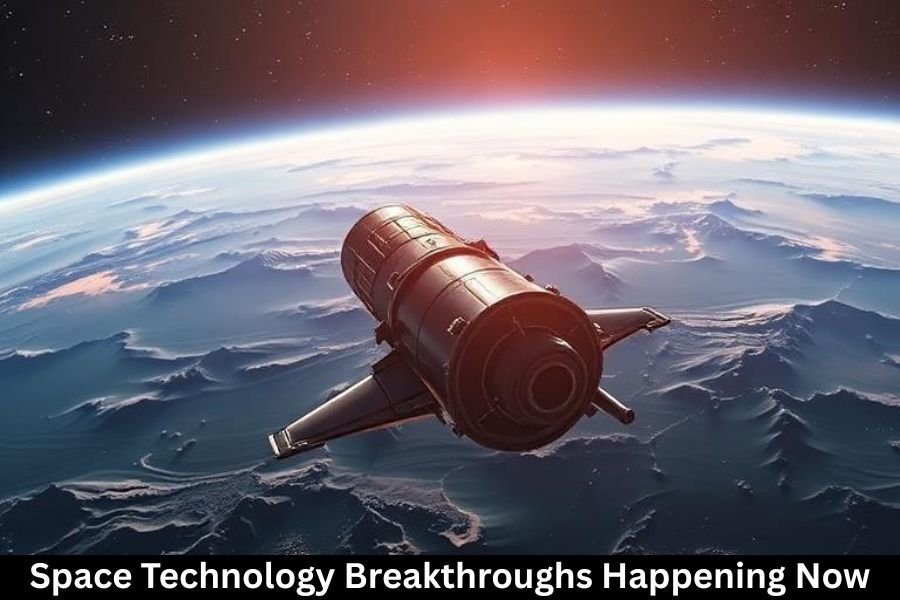
We’re living in a time where space no longer feels distant or unreachable. It’s not just for astronauts in bulky suits or scientists behind giant telescopes anymore. Space technology breakthroughs happening now are shaping how we communicate, navigate, protect the planet, and even imagine our future beyond Earth.
Why Space Technology Is Advancing Faster Than Ever
The pace of innovation today is like a rocket with no brakes. Lower launch costs, private sector involvement, and rapid advances in AI and materials science are pushing space tech forward faster than ever. Think of it as a perfect storm of curiosity, competition, and capability.
From Science Fiction to Everyday Reality
What once felt like sci-fi movies—reusable rockets, space internet, moon bases—is slowly becoming normal. Space is no longer “out there.” It’s woven into daily life, often without us even noticing.
Reusable Rocket Technology
Reusable rockets are one of the biggest game-changers in modern space exploration.
How Reusable Rockets Changed the Game
In the past, rockets were one-and-done. Imagine throwing away an airplane after one flight—crazy, right? Reusable rockets flipped that logic, allowing boosters to land, refuel, and fly again.
Cost Reduction and Sustainability Benefits
Reusability dramatically cuts costs and reduces waste. Fewer materials, fewer launches wasted, and faster turnaround times mean space access is no longer reserved for governments with massive budgets.
Key Players Leading Reusable Launch Systems
Private companies and national agencies alike are refining reusable launch vehicles, making space launches more frequent and reliable than ever before.
Small Satellites and CubeSats Revolution
Big satellites are no longer the only stars of the show.
What Are CubeSats and Nano-Satellites
CubeSats are tiny satellites—some as small as a shoebox—that pack serious technological punch. They’re modular, lightweight, and incredibly efficient.
Affordable Access to Space
Because they’re small and cheap, universities, startups, and even high schools can launch satellites. Space is no longer exclusive—it’s democratic.
Real-World Applications of Small Satellites
From weather tracking and agriculture to disaster response and GPS enhancement, these mini marvels are everywhere.
Artificial Intelligence in Space Technology
AI is becoming the brain behind modern space systems.
AI-Powered Spacecraft and Satellites
Satellites now analyze data onboard instead of sending everything back to Earth. That means faster decisions and less bandwidth usage.
Autonomous Navigation and Decision-Making
AI allows spacecraft to dodge obstacles, optimize routes, and adapt to unexpected situations without waiting for human commands.
Predictive Maintenance Using AI
AI spots problems before they happen, saving missions from failure and extending satellite lifespans.
Space-Based Internet and Communication
Internet from space isn’t a dream—it’s already here.
Satellite Mega-Constellations Explained
Thousands of small satellites are being placed in low Earth orbit to create global internet coverage.
Bridging the Global Digital Divide
Remote villages, ships at sea, and disaster zones can now connect to the internet thanks to space-based networks.
Challenges of Orbital Congestion
More satellites mean more traffic, making space traffic management a growing priority.
Breakthroughs in Space Propulsion Systems
Getting around space is getting smarter.
Ion and Plasma Propulsion
These engines use electricity instead of fuel, providing gentle but constant thrust—perfect for long missions.
Faster, Farther, More Efficient Travel
While not flashy, these systems can eventually outperform traditional rockets over long distances.
Nuclear and Experimental Propulsion Concepts
Advanced propulsion could slash travel time to Mars and beyond, opening doors to deep space exploration.
Lunar Exploration and Moon Technologies
The Moon is back in the spotlight.
Return to the Moon Missions
New missions aim not just to visit, but to stay. The Moon is becoming a testing ground for future space living.
Lunar Bases and In-Situ Resource Utilization
Using lunar ice and soil to create fuel and building materials reduces dependence on Earth.
Why the Moon Matters Again
The Moon is a stepping stone—close enough to learn, far enough to challenge us.
Mars Technology and Deep Space Exploration
Mars isn’t just a red dot anymore.
Advanced Rovers and Robotics
Modern rovers act like robotic scientists, drilling, analyzing, and sending detailed data back home.
Preparing for Human Missions to Mars
Life-support systems, radiation protection, and habitat design are advancing rapidly.
Life Detection Technologies
Sophisticated instruments are searching for signs of ancient or microbial life.
Space Manufacturing and 3D Printing
Space isn’t just for exploration—it’s for production.
Manufacturing in Microgravity
Microgravity allows for materials and medicines impossible to make on Earth.
Building Structures in Space
3D printers could build satellites, tools, and even habitats right in orbit.
Long-Term Benefits for Space Colonization
Manufacturing in space reduces launch needs and supports long-term missions.
Space Tourism and Commercial Spaceflight
Space is becoming a destination.
The Rise of Private Space Travel
Suborbital and orbital trips are opening space to civilians.
Safety and Training Innovations
New training systems and automated controls make spaceflight safer for non-astronauts.
Economic Impact of Space Tourism
Tourism fuels innovation and funds future exploration.
Space Debris Management Technologies
Space junk is a serious issue.
The Growing Space Junk Problem
Thousands of defunct objects orbit Earth, posing collision risks.
Active Debris Removal Systems
New tech uses nets, harpoons, and robotic arms to clean up orbit.
Sustainable Space Practices
Responsible design ensures future missions don’t worsen the problem.
Earth Observation and Climate Monitoring
Space helps protect our home planet.
Advanced Imaging and Sensors
High-resolution satellites monitor forests, oceans, and cities in real time.
Tracking Climate Change from Space
Data from orbit reveals temperature trends, ice melt, and sea-level rise.
Disaster Prediction and Management
Early warnings save lives during floods, fires, and storms.
Quantum Technology in Space
Quantum tech is redefining security.
Quantum Communication Satellites
These systems enable ultra-secure data transmission.
Unhackable Space-Based Networks
Quantum encryption could make hacking virtually impossible.
The Future of Space Security
Secure communication is vital for both civilian and scientific missions.
Space Energy and Solar Power
Energy from space could power Earth.
Space-Based Solar Power Concepts
Satellites collect solar energy 24/7 without weather interference.
Wireless Energy Transmission
Energy is beamed back to Earth safely using microwaves.
Powering the Future from Orbit
This could revolutionize clean energy access worldwide.
International Collaboration in Space Tech
Space thrives on teamwork.
Joint Missions and Shared Innovation
Countries combine expertise for ambitious missions.
Public-Private Partnerships
Governments and companies work together to speed innovation.
The Global Space Economy
Space is becoming a trillion-dollar industry.
The Future of Space Technology
So, what’s next?
What’s Coming in the Next Decade
Expect smarter AI, faster propulsion, and deeper exploration.
Challenges and Ethical Considerations
Sustainability, safety, and fairness will shape the next space era.
Conclusion
Space technology breakthroughs happening now are reshaping how humanity sees its place in the universe. From reusable rockets and AI-driven satellites to lunar bases and quantum communication, the boundaries of possibility are expanding every day. Space is no longer just a destination—it’s a platform for innovation, collaboration, and hope for the future.
FAQs
1. What is the biggest space technology breakthrough today?
Reusable rockets and AI-powered satellites are among the most impactful breakthroughs.
2. How does space technology affect daily life?
It improves communication, navigation, weather forecasting, and disaster management.
3. Is space tourism safe?
Safety standards are improving rapidly, with advanced automation and training systems.
4. Why are small satellites important?
They lower costs and make space access available to more organizations.
5. Will humans live on the Moon or Mars soon?
Technological foundations are being built now, making it a re